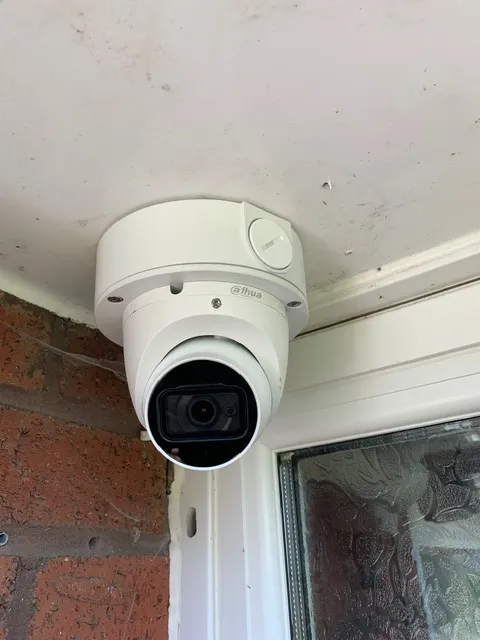
What is the best CCTV camera for night vision?

Night vision is the most critical feature for any CCTV system in the UK, where winter nights are long and properties need round-the-clock protection. This guide explains the different night vision technologies available and helps you choose the right camera for your specific needs.
Gary Pearce, a certified UK security and data cabling installer with 15+ years of experience serving Surrey and the South East, provides expert advice on this topic.
What types of night vision are available for CCTV cameras?
When it comes to night vision for CCTV cameras in the UK, there are several types available. Here's a breakdown of the options:
Infrared (IR): This is the most common type of night vision used in CCTV systems. IR cameras emit invisible light that illuminates the scene, allowing the camera to capture clear images even in complete darkness. They typically come with adjustable IR LED lights that can be fine-tuned according to your requirements.
Starlight/Low Light Sensitivity: Some advanced CCTV cameras are designed to work effectively in low-light conditions without the need for additional lighting. These cameras have highly sensitive image sensors that can capture images with minimal light, making them ideal for monitoring areas where IR illumination may not be practical or desirable.
Thermal Imaging: This type of night vision uses heat-sensing technology to detect objects based on their infrared radiation. Thermal cameras can see through smoke, fog, and other obstacles that might hinder the performance of traditional IR cameras. However, they are generally more expensive than IR cameras and may require additional calibration.
When selecting night vision for your CCTV system, consider the following factors:
- Resolution: Higher resolution cameras (e.g., 4K) will provide clearer images in low-light conditions.
- IR LED Power: Ensure that the camera has sufficient IR illumination to cover the required area. Look for cameras with adjustable IR levels or those that can be paired with additional IR lights if needed.
- Sensitivity: Opt for cameras with high-low light sensitivity for better performance in various lighting conditions.
- Weather Resistance: If your CCTV system will be installed outdoors, choose cameras with an IP rating suitable for the expected environmental conditions (e.g., IP66 or higher).
- Storage and Reliability: Consider cameras that offer on-board storage options (e.g., microSD card slots) to ensure continuous recording in case of internet connectivity issues.
When budgeting for your CCTV system, allocate a portion of your funds towards high-quality night vision components. While it may be tempting to opt for cheaper alternatives, investing in reliable and efficient night vision technology will pay off in the long run by providing better security and peace of mind.
Remember to consult with a professional CCTV installer like myself to ensure that you select the most suitable night vision solution for your specific property type and requirements. Factors such as the size of the area being monitored, the level of detail needed, and any potential obstructions should all be taken into account when designing your system.
What is the difference between IR and true colour night vision?
The main difference between IR (infrared) and true colour night vision is how they illuminate low-light scenes. IR cameras use invisible infrared light emitted by LEDs or heat lamps to create an image. True colour night vision uses advanced image sensors and light enhancement techniques to capture real colour images even in complete darkness.
IR cameras are cheaper and widely used, but the resulting black-and-white images can look unnatural. True colour night vision is more expensive, typically starting from around £500 per camera, but it provides much richer, more detailed colour images that are easier to interpret. It's ideal for security applications where you need to identify people or vehicles clearly.
True colour night vision also has other advantages over IR:
Wide Dynamic Range (WDR): This allows the camera to handle high contrast scenes with both very bright and very dark areas, which is common in outdoor surveillance. WDR is essential for capturing clear images of moving vehicles against a brightly lit sky or buildings.
Day/Night Mode: True colour cameras switch automatically between daytime and night-time modes. In daylight they capture full colour video. At dusk or in complete darkness, they switch to enhanced night vision mode without any visible flicker.
True Colour at Night: While IR cameras show black-and-white images, true colour cameras can maintain accurate colour reproduction down to starlight levels. This is useful for monitoring property that needs 24/7 surveillance.
In summary, while IR is good enough for many applications and much cheaper, true colour night vision provides a superior image quality and features that are essential for professional security installations on properties like Victorian terraces, new builds, semi-detached homes or stone cottages where clear identification of intruders is critical. The extra cost is justified by the improved reliability and evidence-gathering capabilities. Always specify cameras with WDR, day/night mode and true colour night vision capability when designing systems for low-light conditions.
How far should night vision CCTV cameras reach in UK properties?
When installing night vision CCTV cameras in UK properties, the effective range will depend on several factors including the camera's specifications, environmental conditions and the desired resolution. For residential installations, a minimum range of 20-30 metres is typically sufficient to cover most areas of interest such as entrances, driveways or gardens.
To achieve this range, look for cameras with a minimum IR (infrared) illuminator power of 30W. Higher wattage will provide better performance in complete darkness. Also, ensure the camera has a wide-angle lens, usually between 3-8mm, to capture a larger area within the specified distance.
For properties with larger gardens or those requiring longer range surveillance, such as farms or estates, consider cameras with IR illuminators up to 50W and adjustable focal length lenses. This will allow you to cover distances of up to 100 metres while maintaining clear footage.
When selecting cameras for indoor use in Victorian terraces, semi-detached houses or new builds, opt for dome-shaped models that blend seamlessly with the interior décor. For outdoor installations on stone cottages or other structures, choose weatherproof cameras with IP67 rating to ensure durability against harsh elements.
Always ensure compliance with UK data protection laws by installing cameras in areas where there is a legitimate need for surveillance and by following guidelines set out in the Data Protection Act 2018 and GDPR. Clearly signpost camera locations to maintain transparency and avoid unwarranted intrusion.
When budgeting, allocate GBP 100-150 per camera for mid-range systems with IR illuminators and consider spending more on higher-end models if you require longer ranges or enhanced features such as motion detection and recording in HD resolution.
In summary, for most residential properties in the UK, aim for a minimum range of 20-30 metres using cameras with at least 30W IR illuminators and wide-angle lenses. Adjust specifications according to your specific needs and ensure compliance with relevant laws and guidelines.
What is a starlight CCTV camera and do I need one?
A starlight CCTV camera is a type of IP camera that uses advanced image sensor technology to capture high-quality video in low-light conditions. These cameras can see in near darkness, with some models capable of producing clear images at light levels as low as 0.0005 lux.
You may need a starlight CCTV camera if your property has areas that are frequently in the dark or have limited lighting. This could include:
- A Victorian terrace house with narrow passageways and small windows
- A new build home with an outdoor swimming pool area
- A semi-detached property with a rear garden lacking street lighting
- A stone cottage with dimly lit interiors
The main advantage of starlight cameras is their ability to provide clear, detailed footage in low light. This can be crucial for security purposes, allowing you to monitor your property around the clock without worrying about insufficient lighting.
When choosing a starlight CCTV camera, look for the following features:
- IR (infrared) cut filter: Allows the camera to capture colour images during the day and switch to monochrome at night.
- True Day/Night ICX618 P-IR CCD sensor: Offers exceptional low-light performance.
- 3.6mm wide angle lens: Provides a wider field of view for better coverage.
- IP66 weatherproof rating: Ensures the camera can withstand harsh outdoor conditions.
You should also consider the camera's resolution (minimum 1080p), storage options (SD card or cloud), and compatibility with your existing CCTV system.
Be aware that installing CCTV, including starlight cameras, is subject to UK data protection laws. You must display clear signs that CCTV is in use on your property, and ensure that your system complies with the Data Protection Act 2018.
When installing your camera, position it to avoid capturing neighbours' private areas or public spaces. Also, ensure that any recorded footage is securely stored and accessed only by authorized personnel.
Finally, remember that while starlight cameras offer excellent low-light performance, they are not a substitute for proper lighting. Consider installing outdoor lights or motion-activated floodlights in conjunction with your CCTV system to further enhance security.
In summary, if you have areas of your property that are frequently dark or poorly lit, a starlight CCTV camera can provide valuable peace of mind by allowing you to monitor these spaces clearly day and night. Just be sure to comply with UK data protection laws when installing and using your system.
How much does a night vision CCTV system cost in the UK?
When it comes to night vision CCTV systems in the UK, there are several factors that will influence the overall cost. The price can vary significantly depending on the specific requirements of your property and the features you desire in your system.
At the most basic level, you can expect to pay anywhere from £500 to £1000 for a small, 4-camera system with basic night vision capabilities. This would typically include a digital video recorder (DVR), cameras, cables, and installation. However, this is just the starting point.
For larger properties or those requiring more extensive coverage, costs can quickly escalate. A comprehensive system with 8-12 cameras, higher resolution cameras, advanced night vision (up to 100m range), and a high-capacity DVR could easily exceed £3000.
It's also important to consider additional features that may increase the overall cost:
- Remote viewing capabilities allow you to access your CCTV system from anywhere using an app on your smartphone or tablet. This can add several hundred pounds to the price.
- Motion detection alerts, which send notifications to your phone when movement is detected, typically require a subscription to a monitoring service and can cost £20-£40 per month.
- Cloud storage for recording footage allows you to store video off-site and can prevent data loss in case of equipment failure or theft. This usually incurs an additional monthly fee.
When budgeting for your night vision CCTV system, it's essential to factor in the cost of professional installation. Reputable installers will ensure that your system is properly configured, secure, and compliant with UK data protection laws (such as GDPR). Installation costs can vary widely depending on the complexity of the job, but you should expect to pay a minimum of £500 for a basic installation.
In summary, while you can find entry-level night vision CCTV systems for under £1000, comprehensive systems tailored to your specific needs could easily cost several thousand pounds. It's crucial to work with an experienced installer who can guide you through the process and help you make informed decisions about the features that best suit your property and budget.
Do UK regulations affect night vision CCTV placement?
UK regulations do affect night vision CCTV placement. As an experienced installer with 15 years in Surrey and the South East, I can advise on the critical factors to consider.
Firstly, ensure your system meets the Data Protection Act 2018 requirements. This mandates that CCTV systems must only capture what is necessary for their purpose. For residential properties, this usually means focusing on entrances, exits, and other high-risk areas.
When it comes to night vision capabilities, look for cameras with a minimum of 25m IR (infrared) range. This will ensure clear footage even in complete darkness. Higher-end systems may offer up to 100m range, but this is rarely necessary for residential properties.
Be mindful of the placement of your cameras to avoid capturing neighbouring properties or public areas. The ICO's guidance states that CCTV should not capture more than is strictly necessary. For a Victorian terrace, this might mean focusing on entrances and exits rather than installing cameras overlooking neighbours' gardens.
When installing in new builds or semi-detached homes, consider the angle of the cameras carefully to avoid capturing sensitive areas. In some cases, it may be advisable to install physical barriers around the camera lens to prevent unwanted footage.
For stone cottages or properties with unique architectural features, take extra care when positioning cameras. Stone walls can absorb IR light, reducing night vision range. In these cases, consider installing additional IR lights near the camera to improve visibility.
When purchasing your system, look for cameras with weatherproof IP67 rating. This will ensure they can withstand UK weather conditions, including heavy rain and snow. For outdoor installations, also consider a vandal-proof housing for added security.
Finally, always obtain consent from neighbours if you plan to install cameras overlooking their property. The ICO recommends that CCTV owners should be open with neighbours about their surveillance activities.
In summary, while UK regulations do not strictly limit the use of night vision CCTV, it is essential to consider factors such as data protection requirements, camera placement, and neighbour privacy when installing these systems. By following best practices and consulting with an experienced installer like myself, you can ensure your system meets all necessary standards.
Key Takeaways
- True colour night vision uses built-in white LEDs for full-colour footage in total darkness
- IR night vision is the most common and cost-effective option for most UK properties
- Starlight sensors capture usable colour images in extremely low light without extra illumination
- Range matters - check the IR distance rating matches your property layout
- UK properties with large gardens or rural locations need longer-range IR (30m+)
- Gary Pearce has 15+ years of experience installing CCTV systems across Surrey and the South East
Related Guides
- How many CCTV cameras do I need for my house?
- How much does a CCTV system cost in the UK?
- What is the difference between IP and analogue CCTV?
- WiFi Guides
- Data Cabling Guides
- Home Security Guides
Written by Gary Pearce. Need professional cctv advice? Get expert advice or call 07830 638 337.
Article by Gary Pearce — Need help? Call 07830 638 337 or visit our services page